Copper smelting
The copper ore extracted from copper mines is processed into high-grade copper concentrate or copper ore sand through beneficiation. Copper concentrate needs to undergo smelting commission to become refined copper and copper products.
A. Electrolytic copper and refined copper
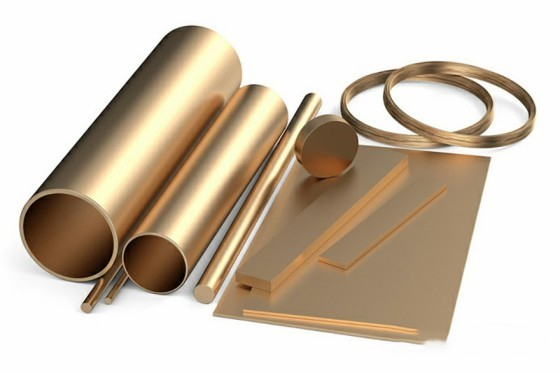
There are two types of copper used in industry: electrolytic copper (containing 99.9% to 99.95% copper) and refined copper (containing 99.0% to 99.7% copper). The former is used in the electrical industry to manufacture special alloys, metal wires, and electrical wires. The latter is used to manufacture other alloys, copper pipes, copper plates, shafts, etc.
B. Copper smelting process
The development of copper metallurgy technology has gone through a long process, but to this day, the smelting of copper is still mainly carried out by pyrometallurgy, which accounts for about 85% of the world's copper production. Modern wet smelting technology is gradually being promoted, and the introduction of wet smelting has greatly reduced the cost of copper smelting.
Let's take a closer look at the two copper smelting methods, pyrometallurgy and hydrometallurgy (SX-EX).
a. Copper smelting by pyrometallurgy:
Cathode copper, also known as electrolytic copper, is produced through melting smelting and electrolytic refining, which is generally suitable for high-grade sulfide copper ore. Pyrometallurgical smelting generally involves first increasing the copper content of the raw ore to 20-30% through beneficiation, and then using it as a copper concentrate for matte smelting in a closed blast furnace, reflector furnace, electric furnace, or flash furnace. The produced matte (ice copper) is then sent to a converter for smelting into coarse copper, and then subjected to oxidation refining and impurity removal in another type of reflector furnace, or cast into an anode plate for electrolysis, to obtain electrolytic copper with a grade of up to 99.9%. This process is short and adaptable, with a copper recovery rate of up to 95%. However, due to the sulfur in the ore being discharged as sulfur dioxide waste gas during the matte making and smelting stages, it is not easy to recover and can easily cause pollution. In recent years, there has been a trend towards continuous and automated smelting in areas such as silver smelting, Noranda smelting, and Mitsubishi smelting in Japan.
In addition to copper concentrate, scrap copper is also the main raw material for refining copper, including old and new scrap copper. Old scrap copper comes from old equipment and machines, abandoned buildings, and underground pipelines; New scrap copper comes from copper chips discarded by processing plants (with a production ratio of about 50% for copper materials). Generally, the supply of scrap copper is relatively stable, and it can be divided into: bare scrap copper (with a grade of over 90%); Yellow mixed copper (wire); Copper containing materials (old motors, circuit boards); Copper produced from scrap copper and other similar materials is also known as recycled copper.
b. Wet copper smelting:
A ship is suitable for low-grade copper oxide, and the refined copper produced is electrolytic copper. Modern wet smelting methods include sulfuric acid roasting leaching electrodeposition, leaching extraction electrodeposition, bacterial leaching, etc., which are suitable for heap leaching, tank leaching or in-situ leaching of low-grade complex ores, copper oxide ores, and copper containing waste ores. Wet smelting technology is gradually being promoted, and it is expected to reach 20% of the total output by the end of this century. The introduction of wet smelting has greatly reduced the cost of copper smelting.
The process flowchart is as follows: Copper extraction (the process of copper entering the organic layer from the water layer) and back extraction (the process of copper entering the water layer from the organic layer) are important technological means of modern wet copper smelting.
The two processes of pyrometallurgy and hydrometallurgy have the following characteristics:
(1) The latter has simpler smelting equipment but higher impurity content, which is a beneficial supplement to the former.
(2) The latter has limitations, limited by the grade and type of ore.
(3) The cost of the former is higher than that of the latter.
It can be seen that wet smelting technology has considerable advantages, but its scope of application is limited, and not all copper mines can be smelted using this process. However, through technological improvements, more and more countries, including the United States, Chile, Canada, Australia, Mexico, and Peru, have applied this process to more copper smelting in recent years. The improvement and promotion of wet smelting technology have reduced the production cost of copper, increased copper ore production capacity, and increased the supply of social resources in the short term, resulting in a relative surplus of total social supply and driving prices.